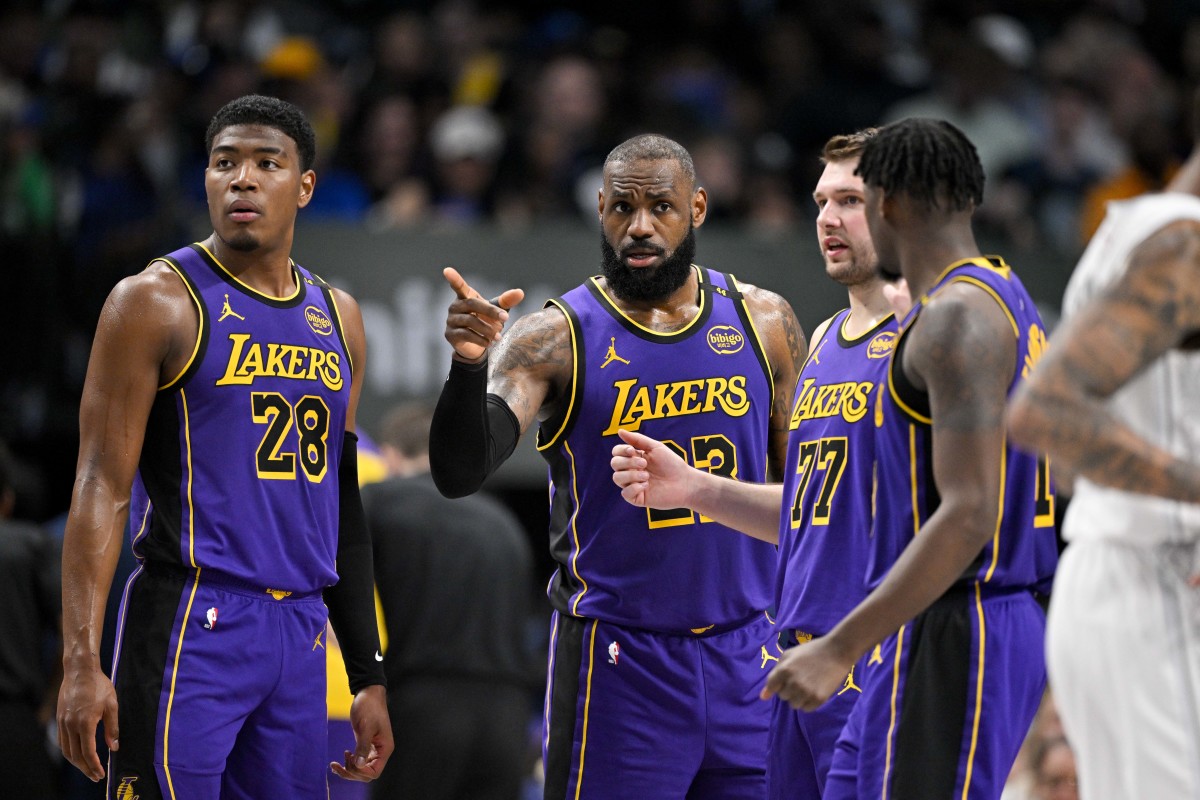
As the NBA free agency period gets underway, the Los Angeles Lakers face an all-too-familiar question: Can they build a championship-caliber team around LeBron James one more time?
On paper, the news that James opted into his $52.6 million player option for the 2025–26 season should be a stabilizing moment. After all, the league’s all-time leading scorer is still a force on the court and remains the centerpiece of one of the NBA’s most valuable franchises. However, for some analysts and Lakers fans, LeBron’s decision to opt in—rather than renegotiate a new deal with a lower annual value—has created concern about the team’s financial flexibility.
The Financial Dilemma
Throughout his career, LeBron James has frequently leveraged player options to maintain power over his career trajectory and team situations. He has occasionally signed shorter deals with slightly reduced salaries to allow his front offices more cap room to build a contender. That’s what some Lakers observers hoped would happen this summer.
Instead, James opted into the final year of his current deal, which pays him $52.6 million—max money. With that commitment locked in, Los Angeles is now struggling financially. The team is well over the salary cap and faces steep luxury tax penalties if it attempts to make additional major moves.
Worse, the Lakers recently lost a key free agent target, Dorian Finney-Smith, who signed with the Houston Rockets. Finney-Smith would have helped address the Lakers’ biggest flaw: frontcourt size and perimeter defense.
A First-Round Exit and a Size Problem
Despite entering the 2024–25 postseason as the Western Conference’s No. 3 seed, the Lakers were dismantled in the first round by the Minnesota Timberwolves in just five games. It was a deflating exit for a team with championship expectations, and the root cause was clear—Los Angeles didn’t have the size or depth in the paint to compete with a physical team like Minnesota.
The midseason blockbuster that sent Anthony Davis to the Dallas Mavericks for Luka Dončić was widely seen as a gamble to maximize the team’s offensive firepower. Dončić is a generational talent and gives the Lakers a new superstar to build around as LeBron winds down his career. But Davis’ departure also left a massive void in the frontcourt that hasn’t yet been filled.
The Lakers’ current depth at the center position is razor-thin. If they are going to seriously compete in a Western Conference loaded with dominant big men—Nikola Jokić, Anthony Davis, Chet Holmgren, and Victor Wembanyama—they need more than just minimum signings and developmental projects.
Austin Reaves and the Looming Cap Crunch
To complicate matters, rising guard Austin Reaves recently turned down a long-term extension with the Lakers, opting to bet on himself and aim for a larger deal in the 2026 offseason. While Reaves is still under contract, his decision adds another wrinkle to the team’s future cap planning.
If the Lakers want to retain Reaves, build a competitive roster around LeBron and Luka, and avoid triggering the dreaded second tax apron—which comes with harsh roster-building penalties—they’ll need to thread the needle perfectly. That means hitting on veteran minimums, draft picks, and mid-level exception players, all while navigating egos and expectations.
Luka’s Future—and August 2nd
Luka Dončić’s long-term future with the Lakers is also questioned. Though he was traded to Los Angeles in February, he can sign a supermax extension with the team beginning August 2, 2025.
All signs currently point to Dončić committing to the franchise long-term. He has spoken positively about playing alongside LeBron and embracing the spotlight in Los Angeles. But NBA history has taught us that nothing is guaranteed. If the Lakers falter again this season—or fail to show a coherent plan for the future—there’s always the risk that Dončić reconsiders.
What’s Next for the Lakers?
The Lakers still have a window—albeit a narrowing one. LeBron James is returning. Luka Dončić is under contract. The franchise still carries the weight and appeal of 17 championships and a global fanbase. But the clock is ticking.
Here are a few key areas where the Lakers must act swiftly:
- Frontcourt Reinforcements: They need at least two viable big men who can play 20–25 minutes a night. A versatile, defense-first center is a must.
- Wing Depth: Losing Finney-Smith stings. The team needs another 3-and-D wing to balance out lineups when LeBron sits or takes on more of a playmaking role.
- Point-of-Attack Defense: With Dončić and Reaves in the backcourt, the Lakers will be vulnerable against faster guard-led teams unless they add a strong defensive guard.
- Locker Room Chemistry: Managing personalities and roles will be crucial after last year’s early exit. LeBron, Luka, and head coach JJ Reddick must be aligned.
LeBron James opting into his $52.6 million deal signals that he still believes in this team. But belief alone won’t win a championship.
The Lakers have the talent to contend—but only if the front office can fix the roster’s glaring holes and find cost-effective ways to support their stars. With the Western Conference getting younger, deeper, and more competitive by the year, there’s little room for error.
The margin is slim, but the opportunity still exists. Whether the Lakers seize it or let it slip away will define the final chapter of LeBron’s storied career—and the next one for Luka Dončić.